
Lehigh County Common Pleas Overview
The Lehigh County Court of Common Pleas is the county's main trial court for major civil cases, felony and misdemeanor criminal cases, family matters, juvenile matters, Orphans' Court proceedings, and appeals from magisterial district courts. Pennsylvania Courts of Common Pleas are courts of general jurisdiction. In Lehigh County, the court is part of the 31st Judicial District.
The official Lehigh County Court of Common Pleas site should be treated as the source for court operations, judges, court administration, local rules, specialty courts, and judicial contact routing. County government pages should be treated as the source for the Clerk of Judicial Records, sheriff, corrections, open records, and elected row offices.
The judges page image was captured from the official Lehigh County Court of Common Pleas judges page.
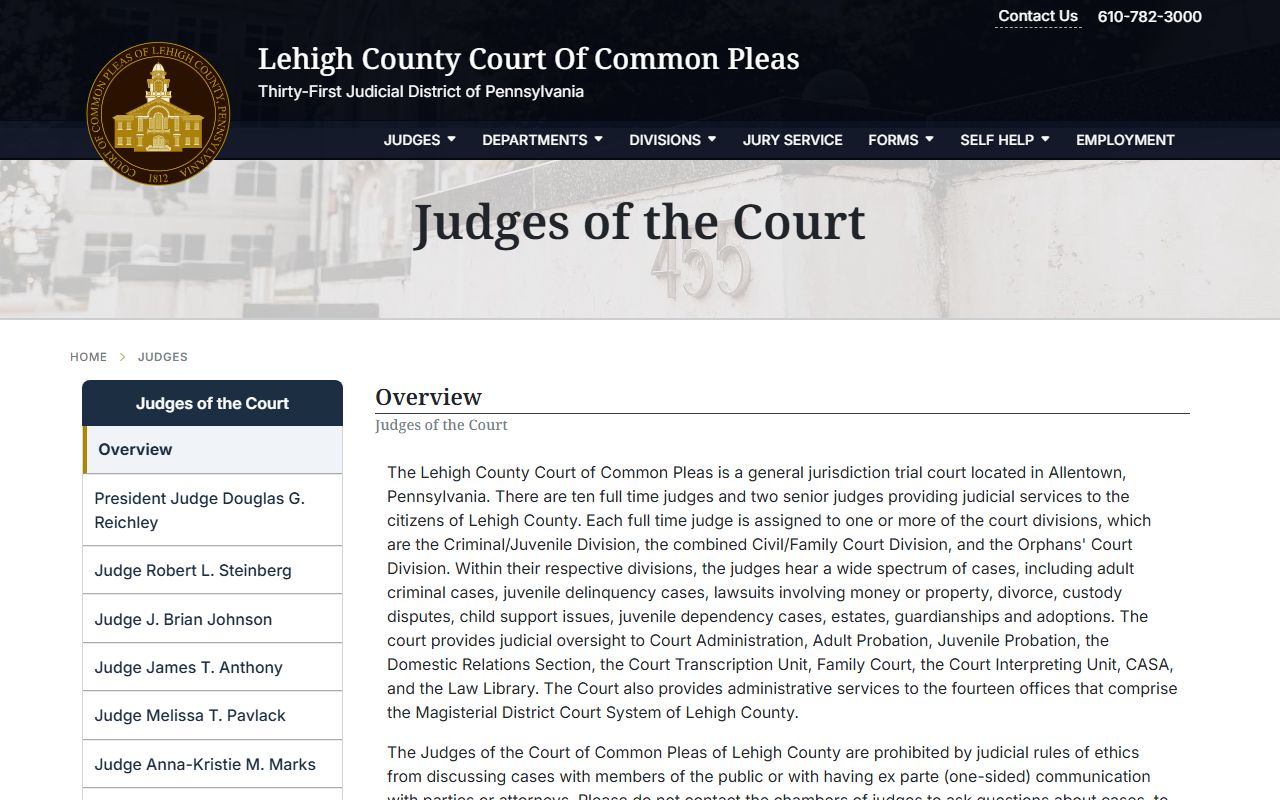
Judge assignment and courtroom information can change, so docket users should confirm hearing details through the current court page or docket notice.
Lehigh County Court Offices
Lehigh County does not use a list of separate numbered district courts for the primary trial-court page. The researched county table is office-based: one Court of Common Pleas at the courthouse, divisions of the Clerk of Judicial Records, the Register of Wills / Orphans' Court side, and multiple magisterial district courts for lower-court matters. The table below keeps the required court-list function while using the Pennsylvania structure found in the research.
| Court / Office | Type | Address or Contact Note | Jurisdiction |
|---|---|---|---|
| Lehigh County Court of Common Pleas | Primary trial court | 455 W. Hamilton St., Allentown, PA 18101 | Felony criminal, major civil, family, juvenile, Orphans' Court, and MDJ appeals. |
| Civil Division / Prothonotary | Civil records office | Clerk of Judicial Records, courthouse/county complex | Civil complaints, judgments, liens, divorce filings, and civil copies. |
| Criminal Division / Clerk of Courts | Criminal records office | Clerk of Judicial Records, courthouse/county complex | Criminal docket filings, certified criminal copies, costs, and fines routing. |
| Register of Wills / Orphans' Court | Estate and Orphans' Court records | Clerk of Judicial Records division | Estates, wills, marriage licenses, guardianships, and Orphans' Court records. |
| Magisterial District Courts | Lower courts | Multiple district offices listed at lccpa.org | Traffic citations, small claims, landlord-tenant, summary criminal, and preliminary criminal events. |
For a case lookup, the key question is not only where the courthouse is. It is whether the matter belongs in Common Pleas, an MDJ office, or a records division that keeps the document copy.
Common Pleas vs MDJ Court
Pennsylvania's lower court layer is the Magisterial District Court system. It performs many functions that other states might call municipal, justice, or JP court functions. This split is a common reason searchers miss Lehigh County court records. A traffic citation or landlord-tenant case may never start at the courthouse, while a felony case may begin at an MDJ office and later move into Common Pleas.
| Point | Court of Common Pleas | Magisterial District Courts | Appellate Courts |
|---|---|---|---|
| Civil jurisdiction | Major civil cases, judgments, family matters, divorce, and appeals. | Small civil claims and landlord-tenant matters. | Review trial-court decisions, not new trial filings. |
| Criminal jurisdiction | Felony and misdemeanor cases after charges move forward. | Preliminary arraignments, bail in many new cases, summary offenses, and preliminary hearings. | Superior Court or Commonwealth Court depending on case type. |
| Traffic role | DUI, appeals, and more serious matters when they reach Common Pleas. | Most traffic citations and summary traffic proceedings. | Appeals after trial-court action when allowed. |
| Record search | Use UJS Common Pleas docket sheets and Clerk of Judicial Records divisions. | Use UJS MDJ docket sheets or the specific MDJ office. | Use appellate docket resources. |
Lehigh County Case Flow
A criminal case often starts outside the Common Pleas file. After arrest or complaint filing, preliminary arraignment and bail may be handled by a magisterial district judge. If charges are held for court, the case moves to the Court of Common Pleas, where the docket may show the information, arraignment, pretrial events, plea or trial, disposition, sentence, and appeal. The Lehigh County District Attorney prosecutes county criminal cases, while eligible defendants may apply through the Public Defender.
Criminal flow: Arrest or complaint › preliminary arraignment › MDJ preliminary hearing › Common Pleas information › arraignment › pretrial › plea or trial › sentencing › appeal.
Civil flow: Complaint or petition filed › service › answer or response › motions › discovery or conference › order, judgment, trial, settlement, or appeal.
Note: A docket can show the court path without giving free access to every document image in the case file.
Lehigh County Court Divisions
The Court of Common Pleas handles several case groups under one county trial-court system. Civil matters include complaints, judgments, liens, orders, and appeals. Criminal matters include felony and misdemeanor cases, pleas, sentencing, and probation-related entries. Family matters can include divorce, custody, support, protection-from-abuse, and related filings. Juvenile records and many sensitive family records have stronger access limits than ordinary civil docket entries.
Orphans' Court matters are part of the Common Pleas structure in Pennsylvania, but Lehigh County estate and related records also route through the Register of Wills / Orphans' Court division. That is the correct channel for wills, estate files, guardianship matters, and many marriage-license records. Divorce case copies, by contrast, route through the Civil Division / Prothonotary.
- Prothonotary
- The civil records side of the Clerk of Judicial Records.
- Clerk of Courts
- The criminal records side of the Clerk of Judicial Records.
- MDJ
- A Magisterial District Judge handling lower-court matters and preliminary criminal events.
- Orphans' Court
- The Pennsylvania court division for estates, guardianships, and related fiduciary matters.
Lehigh County Judicial District
Lehigh County is Pennsylvania's 31st Judicial District. Appeals from the Lehigh County Court of Common Pleas generally go to the Superior Court of Pennsylvania for most criminal and civil appeals. Cases involving government agencies, public-law matters, or other Commonwealth Court jurisdiction may go to the Commonwealth Court of Pennsylvania. The Supreme Court of Pennsylvania is the state's court of last resort.
The elected officials image was captured from the official Lehigh County elected officials page.
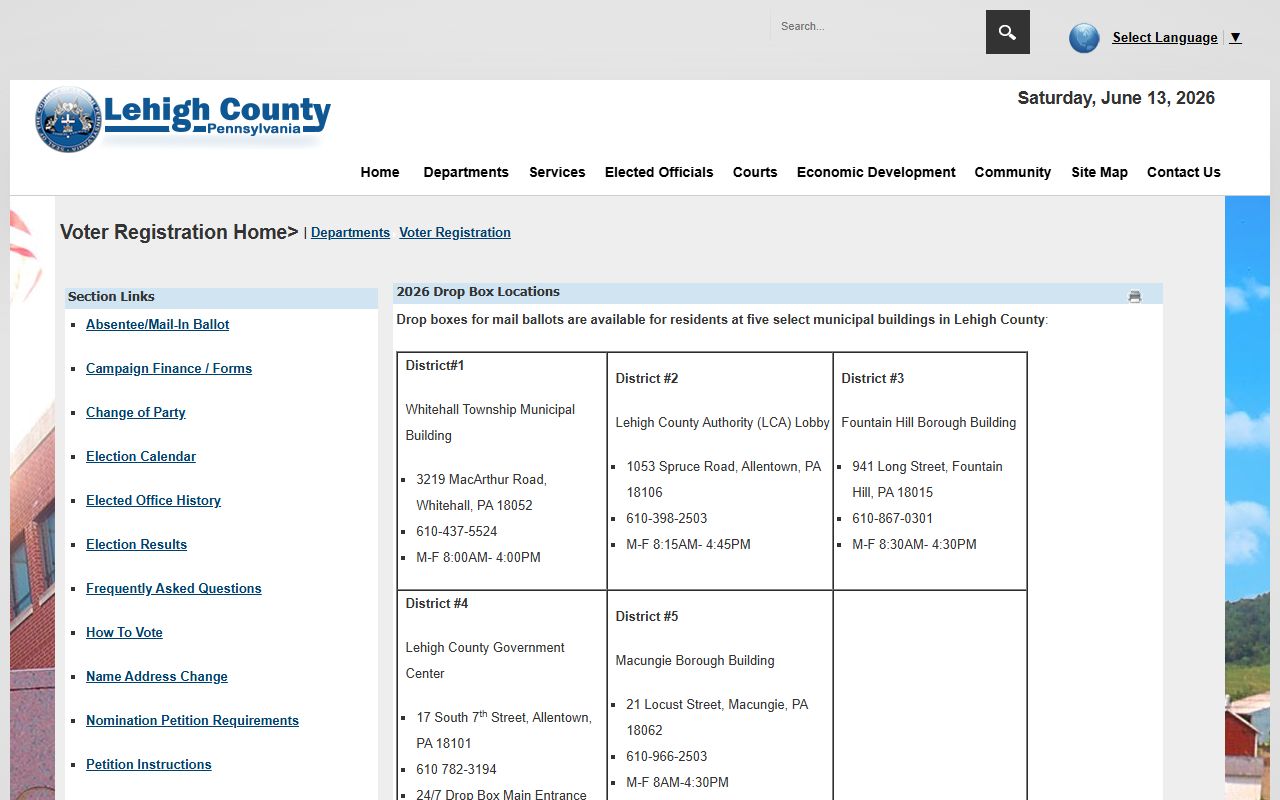
County elected-official pages are useful for confirming row-office names, while court pages are better for judge assignments and court operations.
Lehigh County Lower Courts
Lehigh County Magisterial District Judges handle many public-facing court events before a case ever reaches the main courthouse. Traffic citations, non-traffic summary offenses, landlord-tenant complaints, small civil claims, preliminary arraignments, bail decisions in many new cases, and preliminary hearings often start at the MDJ level. The statewide Pennsylvania Courts MDJ overview explains this lower-court role.
For records work, that means a person should not search only Common Pleas dockets. A landlord-tenant case may remain at an MDJ office unless appealed. A traffic citation may be resolved at the MDJ level, while the driver's license history is maintained by PennDOT. A new criminal case may show early activity in MDJ records before it appears as a Common Pleas criminal docket.
The Lehigh County Courthouse is at 455 West Hamilton Street in downtown Allentown. Visitors should allow time for parking, security screening, elevators, and finding the assigned courtroom. Weapons should not be brought to court, and courtroom recording, photography, and phone use may be limited by court order, judge policy, or building rule.