
Lehigh County Prothonotary Office
Lehigh County uses a Clerk of Judicial Records model rather than a single office called Clerk of Court. The elected Clerk of Judicial Records is Michelle Graupner, and the office combines civil, criminal, Register of Wills, and Recorder of Deeds functions. For civil court work, the Prothonotary label points to the Civil Division. That division is the correct starting point for civil complaints, judgments, liens, divorce court filings, civil docket copies, and certified civil case documents from the Court of Common Pleas.
The Prothonotary function is distinct from the Lehigh County Clerk of Courts, which handles criminal court records through the Criminal Division. It is also different from the Register of Wills and Orphans' Court side of the office, which handles estates, wills, marriage licenses, guardianship filings, and Orphans' Court records. Choosing the right division saves time because each division uses its own record routing, copy process, and fee confirmation path.
Civil Division / Prothonotary
Clerk of Judicial Records: Michelle Graupner
Lehigh County Courthouse, Room 122
455 W. Hamilton St.
Allentown, PA 18101
Monday-Friday, 8:00 a.m. to 4:30 p.m.; closed county holidays
Lehigh County Civil Record Duties
The Civil Division receives and maintains filings for civil Court of Common Pleas matters. Those records can include complaints, answers, motions, praecipes, judgments, liens, satisfaction entries, divorce filings, appeals from lower courts, and orders entered in civil cases. Public docket information may appear through statewide court search tools, while document copies and certified copies are handled through the county records office that maintains the file.
The county's Clerk of Judicial Records page is the hub for the office. Civil users should follow the Civil Division route, not the Criminal Division, if the requested file is a lawsuit, judgment, lien, divorce case, or other non-criminal Common Pleas matter.
- Accept and index civil filings for the Lehigh County Court of Common Pleas.
- Maintain civil docket and case-file materials that are not sealed or restricted.
- Provide plain or certified civil copies when the file, fee, and access status allow it.
- Route users to Attorney Docket Access or public review resources when those systems apply.
- Distinguish civil court records from criminal, estate, marriage, and recorded deed records.
The county history page explains that the unified Clerk of Judicial Records office was created in 2008. That structure helps explain why older references may use narrower office names, while current county pages group several divisions under one elected records office.
Request Lehigh County Certified Copies
A certified civil copy is the version normally needed for formal use outside a basic records check. A plain online docket entry can help identify a case, but it is not the same thing as a certified copy from the Civil Division. The request should identify the case, the parties, the document needed, and whether the copy must be certified, attested, or simply printed for review.
- Find the docket number first. Use UJS Case Search, the Common Pleas docket report, or Lehigh County Online Records Access when the party name is the only detail known.
- Confirm the division. Civil complaints, judgments, liens, and divorce case files route to the Civil Division / Prothonotary, while criminal copies route to the Clerk of Courts.
- Ask the Civil Division what fee and payment method apply before mailing a request. The research did not locate a current official plain-copy or certification fee for civil copies.
- Submit the request with the docket number, party names, document name, copy type, delivery method, and contact information.
- Pick up the copy or wait for the office to mail or otherwise return it under the division's current process.
Current case information is available at the Clerk of Judicial Records Civil Division in Room 122 of the Lehigh County Courthouse. The county's Odyssey Public Access page lists Room 122 at 455 W. Hamilton Street in Allentown and posts weekday office hours of 8:00 a.m. to 4:30 p.m., excluding county holidays.
Lehigh County Request Fields
For court-file copies, a clear request is more useful than a broad public-records demand. Pennsylvania's Right-to-Know Law applies to many county administrative records, but court case records are governed by judiciary access policy and clerk rules. When the document is a civil court filing, use the court case details and the Civil Division route first.
| Field | Required | Notes |
|---|---|---|
| Docket or case number | Best practice | Use the exact Common Pleas civil docket number when known. |
| Party names | Yes | List plaintiff, defendant, petitioner, respondent, or divorce parties as applicable. |
| Document type | Yes | Name the complaint, order, judgment, decree, lien, satisfaction, or docket sheet requested. |
| Copy type | Yes | State whether a plain copy, certified copy, or other formal copy is needed. |
| Delivery method | Usually | Give mailing address, email if accepted, pickup preference, and phone or email for fee questions. |
County open-records fallback requests use requester name, address or email, phone, a description of the records, requested delivery method, and signature or date. That fallback is better suited to county administrative records than sealed court filings or civil documents controlled by court access rules.
Lehigh County Prothonotary Fees
The research did not locate an official current civil copy fee schedule for plain, certified, exemplified, or attested copies. That gap should not be filled with guessed numbers. Civil copy requesters should confirm the current fee with the Civil Division before mailing payment, especially when the request involves certification, multiple pages, or older files that may require staff review.
| Item | Amount |
|---|---|
| Plain civil copies | Not located in official research sources; confirm with Civil Division. |
| Certified civil copies | Not located in official research sources; confirm before mailing payment. |
| Exemplified or attested copies | Not located in official research sources. |
| Attorney Docket Access copies | County notice says older copy swipe cards stopped working November 1, 2024. |
| Estate filing technology fees | Separate Register of Wills schedule lists $41.25 Judicial Computer Project fee, $5.00 Automation Fee, and $5.00 E-Filing Fee at estate case initiation. |
Fee rules differ by division. Marriage licenses, estate filings, and Orphans' Court matters use the Register of Wills / Orphans' Court process, not the civil Prothonotary copy route.
Lehigh County Online Access
Lehigh County Online Records Access, often called ORA, is the county portal for record indexes and county-held records. It is separate from the Pennsylvania UJS docket portal. ORA is useful when the search involves county records, recorded material, estate or marriage indexes, and clerk-held record categories, but exact document access may require account access, a fee, or an office copy request.
The Odyssey Public Access page points civil users to the Clerk of Judicial Records Civil Division for current case information. Attorney Docket Access questions route to Attorney Docket Access, where the county also posted the November 2024 copy-card notice.
| Field Label | Type | Format Notes |
|---|---|---|
| Login or public access prompt | Account/session | Some views may require terms acceptance, account access, or paid access. |
| Search type or record type | Dropdown/tab | Choose the division or record category that matches the file. |
| Name | Text | Use party, grantor, grantee, decedent, or applicant names based on record type. |
| Case or instrument number | Text | Exact numbers are best when known. |
| Date range | Date fields | Use filing, recording, or case dates to narrow broad results. |
The county's Clerk of Judicial Records page is shown in the image captured from the official county source, Lehigh County Clerk of Judicial Records.
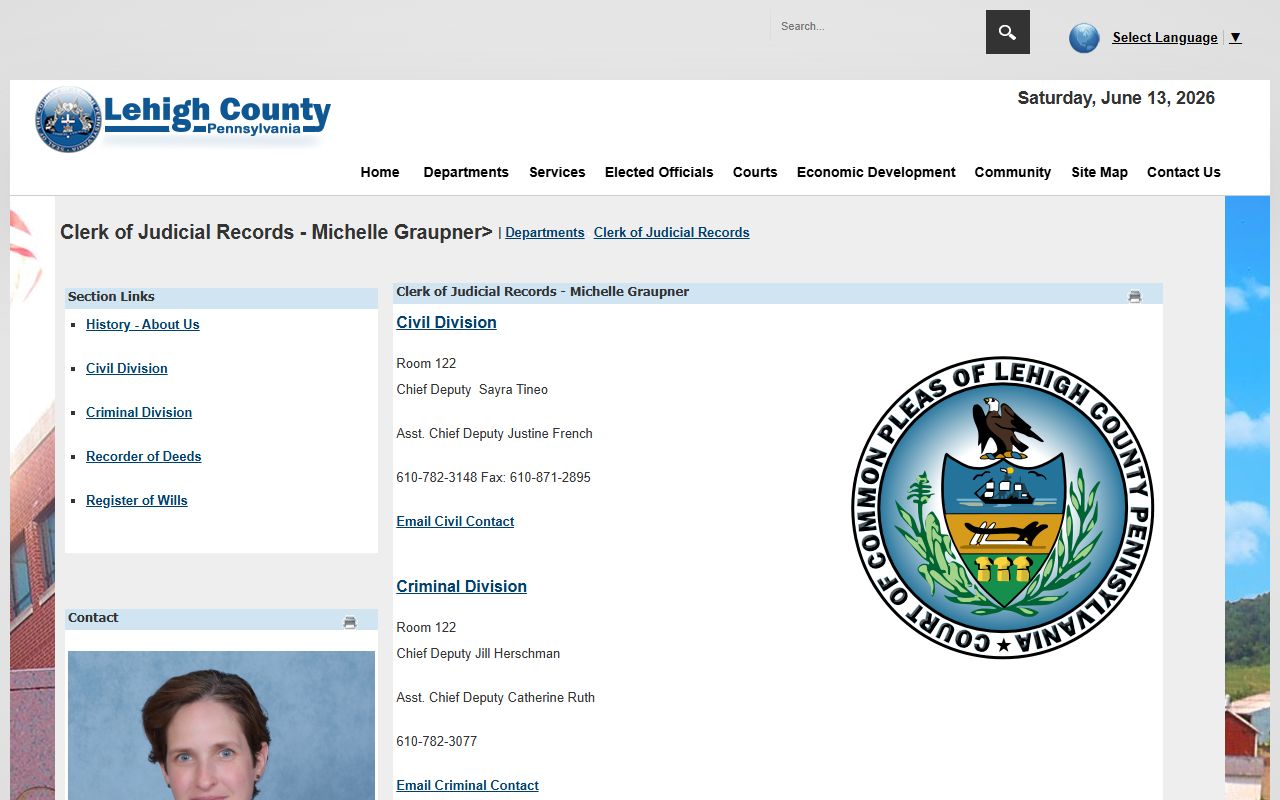
That office hub is the starting point for the Civil Division, Criminal Division, Register of Wills, and Recorder of Deeds links.
The attorney access image comes from the county's Attorney Docket Access page.
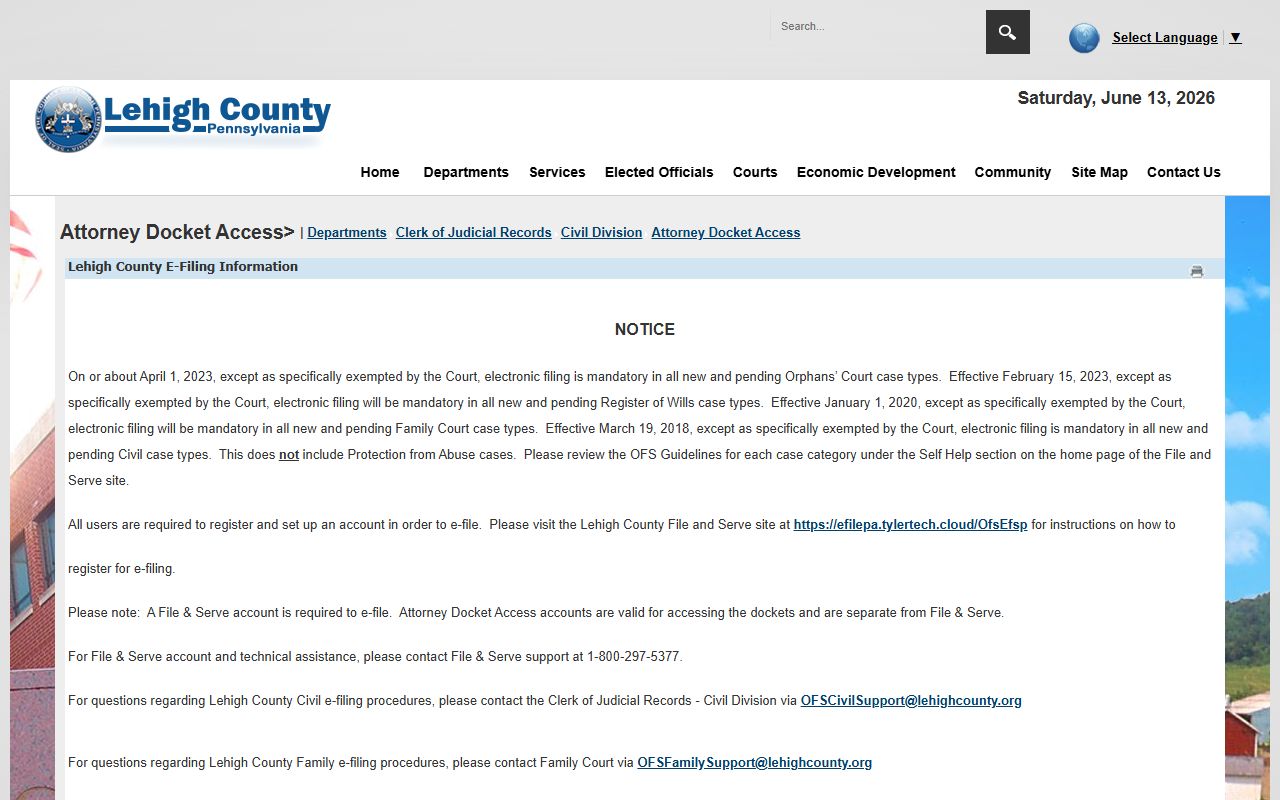
Attorney access is not the same as a public certified-copy request, so public users should still confirm copy access with the Civil Division.
Mail and In-Person Civil Requests
Mail requests should go to the correct Clerk of Judicial Records division only after the requester confirms the fee, case number, party names, copy type, and payment method. In-person requests are often easier when a person is not sure whether the case is civil, criminal, estate, marriage, or recorded-document related. The courthouse route is also useful when a public docket exists but the filing image is not available online.
- Use Civil Division / Prothonotary for civil complaints, judgments, liens, and divorce case copies.
- Use Criminal Division / Clerk of Courts for criminal case copies and criminal docket filings.
- Use Register of Wills / Orphans' Court for estates, wills, marriage licenses, and guardianship files.
- Use Recorder of Deeds when the need is a recorded deed or other land record.
Note: Court staff can route records requests, but they cannot give legal advice or decide which filing a party should submit.