
Orphans' Court Not Probate Court
In Lehigh County, use "Orphans' Court" and "Register of Wills" for probate-style records. Estate administration starts with the Register of Wills when a will is filed or an estate is opened. The Orphans' Court side handles contested estate matters, guardianships, accounts, petitions, fiduciary litigation, and related court orders. The same division family also touches marriage-license records, but marriage records are a separate request type.
The broader Clerk of Judicial Records structure is important. Michelle Graupner is the Clerk of Judicial Records, and the office includes civil, criminal, Register of Wills, and Recorder of Deeds functions. Civil cases route to the Prothonotary side, criminal cases route to the Clerk of Courts side, and estate or guardianship issues route through Register of Wills / Orphans' Court channels.
The Clerk of Judicial Records history source explains the office structure behind Lehigh County Orphans' Court records.
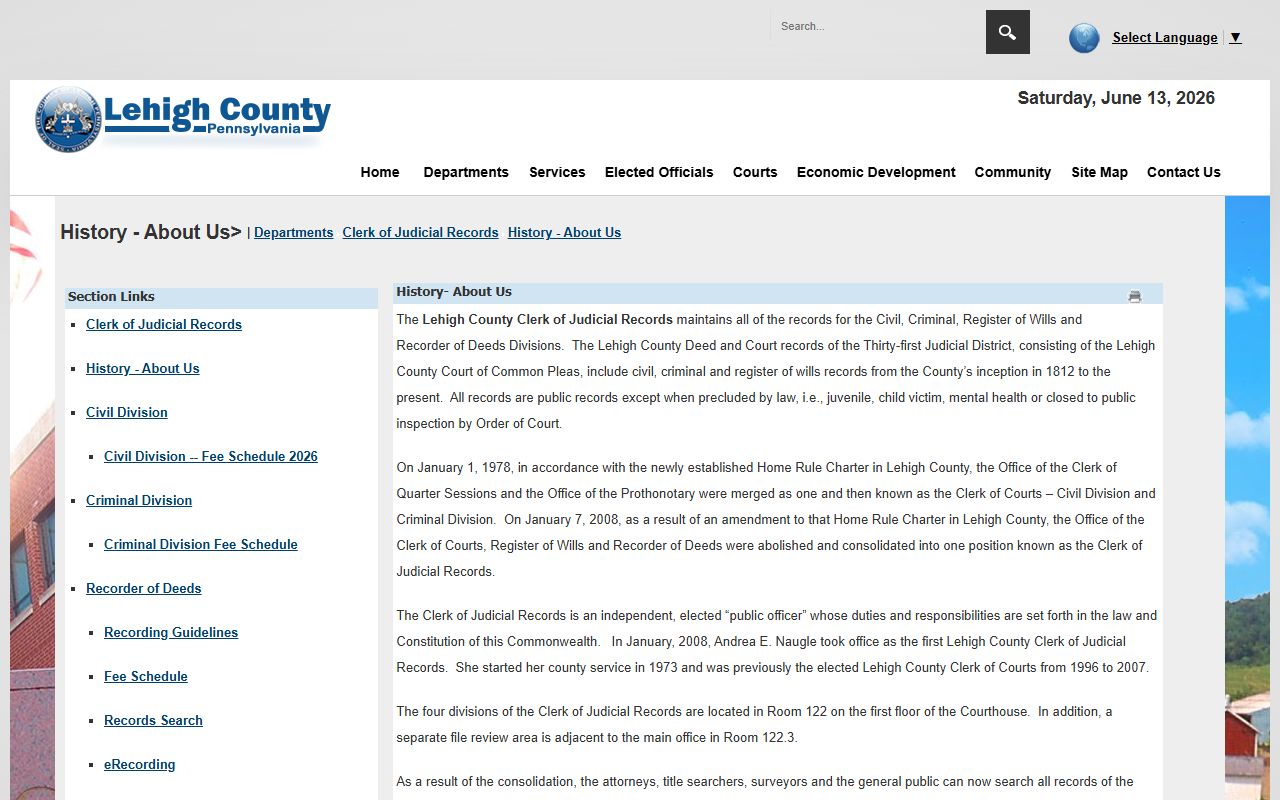
That structure is why estate, marriage, civil, and criminal records should not be requested from one generic clerk counter.
Lehigh County Probate Terms
Probate terms can be terse in a docket or estate file. These definitions help identify the role a person or filing plays in Lehigh County Orphans' Court and Register of Wills records.
- Testator
- A person who made a will.
- Executor
- The person named in a will to carry out estate duties after death.
- Administrator
- A person appointed to manage an estate when there is no executor able to serve.
- Intestate
- Dying without a valid will.
- Letters
- Official authority issued to a personal representative to act for an estate.
- Guardianship
- A court-supervised arrangement for a minor or incapacitated person's affairs.
- Conservatorship
- A term used in some states for property management; in Pennsylvania records, guardianship terms are more likely.
Lehigh County Estate Records
Lehigh County probate records can include wills filed after death, estate petitions, grant of letters, inventories, accounts, renunciations, bonds, receipts, releases, guardianship petitions, guardianship reports, Orphans' Court petitions, decrees, audits, and account matters. Some cases are routine estate administration. Others become litigation when heirs, creditors, fiduciaries, or protected persons dispute an issue.
Real estate can add another office. If an estate matter affects land records, the Recorder of Deeds may hold related recorded documents. That does not make the Recorder of Deeds the estate court. It means the estate file and real estate records may need to be read together.
The Recorder of Deeds source is relevant when a Lehigh County estate record connects to recorded property documents.
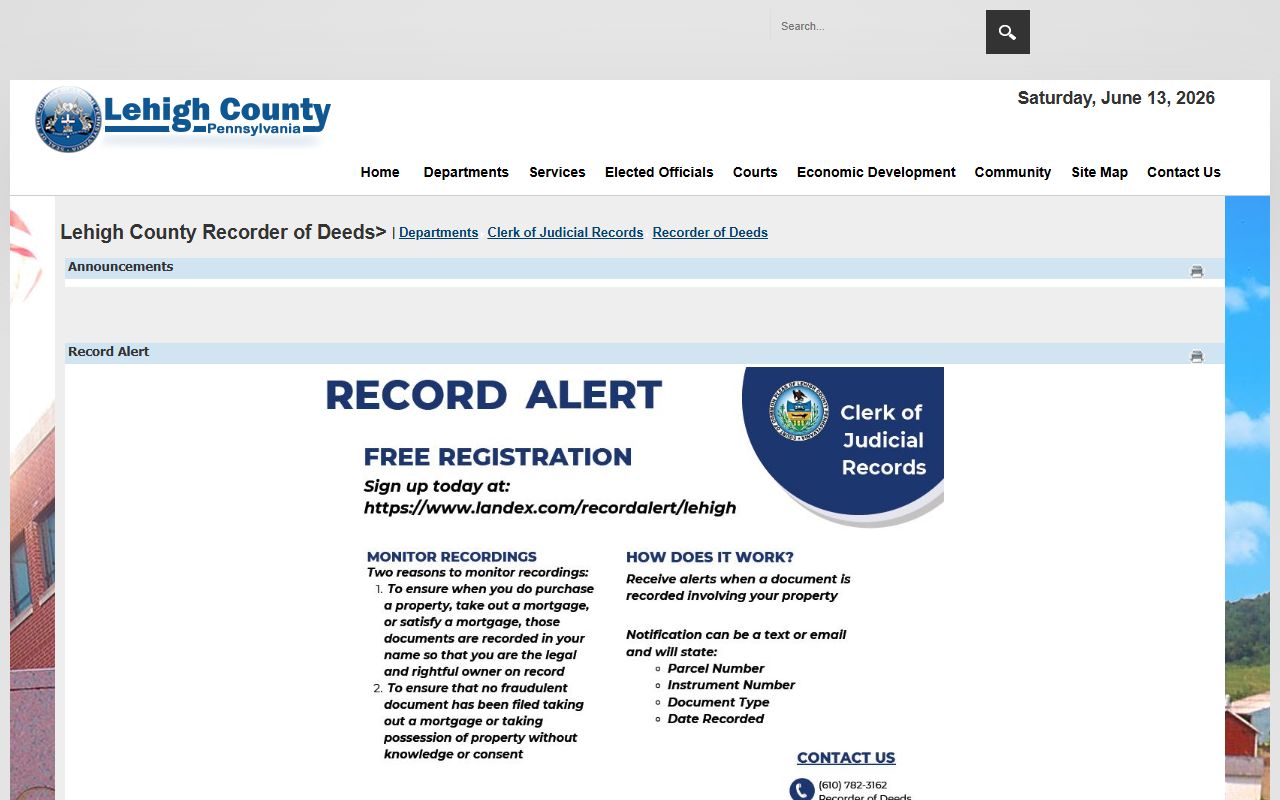
Use Recorder of Deeds records for property instruments, while estate petitions and letters remain Register of Wills or Orphans' Court material.
Search Lehigh County Probate Records
Start with the Register of Wills for estate files, wills, letters, and certified copies. Check Lehigh County Online Records Access when an online county index may help. Contested Orphans' Court cases may also appear in statewide Common Pleas systems depending on how they are docketed, so UJS Case Search can be useful when a dispute has a court docket.
- Gather decedent name, date of death, estate number if known, and approximate filing date.
- Check county ORA or the Register of Wills page for available estate search and copy options.
- Contact or visit the Register of Wills / Orphans' Court counter for certified copies or files not visible online.
- Search UJS if the matter appears to involve a contested Orphans' Court petition or Common Pleas docket.
- Use Recorder of Deeds records only for related property instruments, not for the estate file itself.
| Field Label | Type | Required | Options / Format Notes |
|---|---|---|---|
| Decedent name | Text | Optional or primary | Last name first is usually most useful. |
| Estate number | Text | Optional | Use the exact file number if known. |
| Date range | Date | Optional | May refer to date of death, filing date, or estate opening date. |
| Case type | Dropdown | Optional | Estate, guardianship, or Orphans' Court matter if the portal supports it. |
| Search / Reset | Buttons | n/a | Submit or clear the query. |
Orphans' Court Contact Card
Use the courthouse address for in-person estate, guardianship, and Orphans' Court records routing. The research confirms the courthouse location and the Register of Wills / Orphans' Court role, but it does not provide a safe direct phone number for this page. Confirm the current division phone, room, and accepted payment method before visiting.
Register of Wills / Orphans' Court
Clerk of Judicial Records
Lehigh County Courthouse
455 West Hamilton Street
Allentown, PA 18101
Phone: confirm current division line on the county page
Lehigh County Court of Common Pleas
31st Judicial District
455 West Hamilton Street
Allentown, PA 18101
Use court routing for contested Orphans' Court matters
Orphans' Court Fee Notes
The 2026 Register of Wills Division fee schedule is the official fee source identified in the research. Estate-specific probate fees depend on gross probate value, so a single flat estate-opening amount should not be invented. The research does identify several case-initiation charges that should be checked with the schedule and the office before payment.
| Fee Item | Amount / Note |
|---|---|
| Judicial Computer Project fee | $41.25 collected at case initiation. |
| Automation Fee | $5.00 collected at case initiation. |
| E-Filing Fee | $5.00 collected at case initiation. |
| Estate probate filing fee | Depends on gross probate value under the current fee schedule. |
| Certified copies | Confirm current copy and certification charge with the division. |
Estate Process in Lehigh County
Estate administration begins before a court dispute exists. The usual process is to locate the will and death certificate, contact or appear at the Register of Wills with petition materials, open the estate, receive letters if qualified, give required notices, inventory assets, manage debts and taxes, and file an account or receipts and releases as required. The Orphans' Court becomes central when there is a contest, guardianship issue, account dispute, fiduciary question, or need for a court order.
- Locate the will and death certificate.
- Contact or appear at the Register of Wills with estate petition materials.
- Open the estate and receive letters if qualified.
- Give creditor and heir notices as required.
- Inventory estate assets and manage debts, taxes, and estate property.
- File an account, receipts, releases, or other required closing papers.
- Seek Orphans' Court action for contested matters, guardianship, or fiduciary orders.
Restricted Probate Materials
Not every Lehigh County probate record is open in full. Guardianship, adoption, minor-related material, medical or mental-health information, confidential addresses, and sealed petitions can be restricted. Public indexes may show a limited file reference while sensitive documents remain unavailable. A certified copy request may also be denied or redacted if the requester lacks authority to inspect the record.
For older files, sealed files, or records not visible online, use the Register of Wills / Orphans' Court counter and provide as much identifying information as possible. Decedent name, date of death, estate number, fiduciary name, and approximate filing date can reduce search time. If the estate issue has a Common Pleas docket, the docket sheet can help identify the right filing office and case number.
Important: Orphans' Court access is not the same as a general Right-to-Know request, and court restrictions can still apply.
Certified Estate Copies
Certified copies are requested from the office that holds the estate or Orphans' Court file. A useful request identifies the decedent, date of death, estate number, personal representative, document name, and whether certification is needed. A plain index printout may be enough for research, but banks, title companies, heirs, fiduciaries, or courts may require certified letters, certified orders, or certified copies of filed documents.
Mail requests should not be sent until the division confirms the fee, payment method, and return process. In-person requests are also easier when the requester brings the exact estate number or a narrow date range. If the estate touches real property, check whether a related deed, release, or other property instrument must be obtained from the Recorder of Deeds in addition to the estate file.