
How to Search Lehigh County Court Records
Most Lehigh County court record searches should begin with the Pennsylvania UJS Case Search or the UJS docket sheet reports. The statewide portal is the public first step for Court of Common Pleas and Magisterial District Court docket information. It can show the docket number, parties, filing date, case status, docket events, hearing dates, charges, dispositions, and financial entries that are public under Pennsylvania court policy.
Lehigh County also maintains Online Records Access, often called ORA. ORA is a county records portal, not the same system as the UJS court docket search. It is more useful for county-held indexes, recorded documents, estate or marriage materials, and local clerk records. If a record needs a seal, certified copy, document image, or older file review, the request usually moves from online search to the correct Clerk of Judicial Records division.
The Lehigh County government site is the broad routing point for county departments, while the Lehigh County Court of Common Pleas site is the court operations source. These two sources work together, but they answer different questions.
- Start with the UJS Case Search or the Common Pleas and Magisterial District docket reports.
- Select Lehigh County when the search form allows a county filter.
- Use a docket number first. If none is known, search by participant name and date range.
- Open the docket sheet and note the court level, case status, docket events, and next listed hearing.
- Contact the proper Clerk of Judicial Records division if the public docket does not provide the copy or document needed.
The UJS Case Search page is one of the main online starting points for Lehigh County Court records.
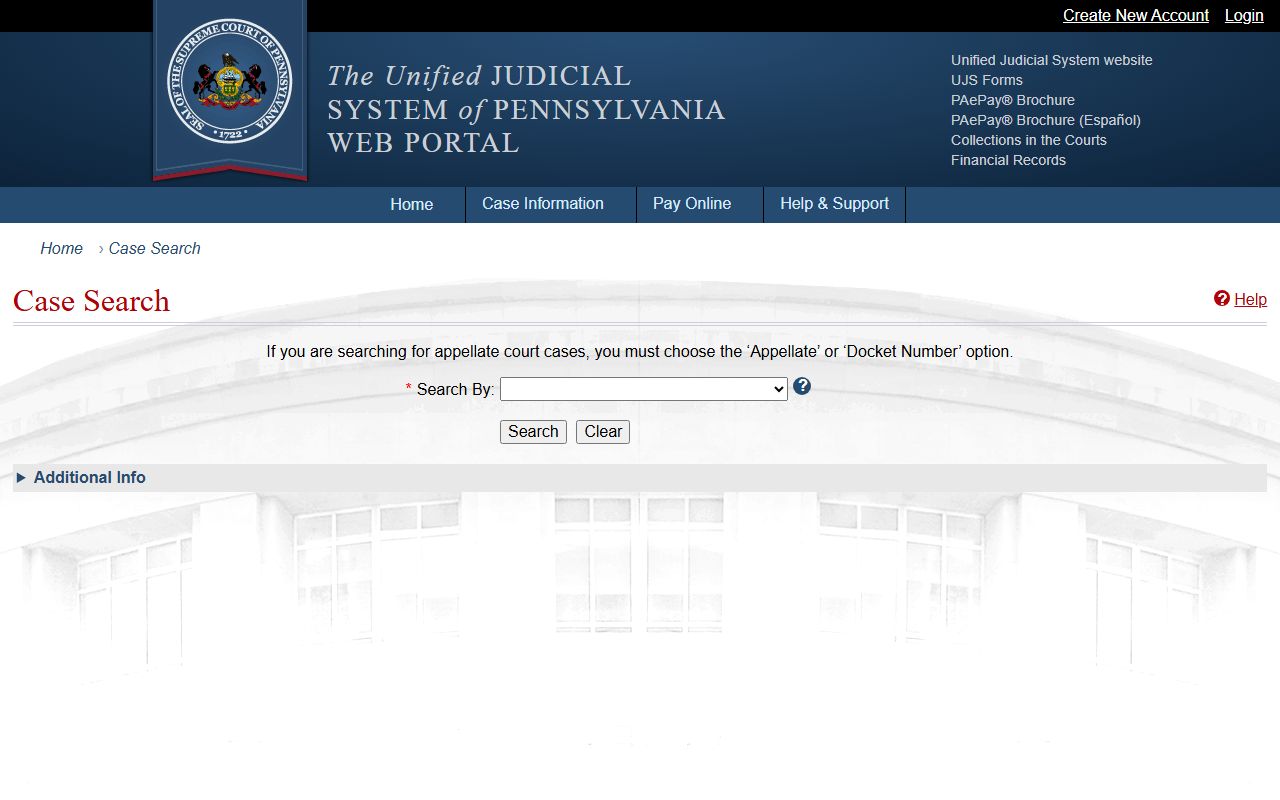
Use that statewide search for docket leads, then use county offices for certified copies and files that are not downloadable.
| Field Label | Type | Required | Format Notes |
|---|---|---|---|
| Court Type | Dropdown or report type | Yes | Choose Common Pleas, Magisterial District, or appellate search as needed. |
| County | Dropdown | Often useful | Select Lehigh to narrow the statewide docket pool. |
| Docket Number | Text | No | Common Pleas criminal dockets often include county code 39. |
| Participant Name | Text | No | Use last name and first name fields where available. |
| Date Range | Date fields | No | Narrows results when common names return too many matches. |
Inside Lehigh County Court
Lehigh County is part of Pennsylvania's 31st Judicial District. Its primary trial court is the Lehigh County Court of Common Pleas. That court hears felony criminal cases, major civil suits, family matters, juvenile matters, Orphans' Court issues, and appeals from Magisterial District Court. It is the court many people mean when they ask for a Lehigh County Court record.
Lower court work is handled through Magisterial District Courts. These courts hear traffic citations, summary criminal matters, landlord-tenant cases, small civil claims, preliminary arraignments, bail decisions in many new cases, and preliminary hearings. A criminal matter may begin at an MDJ office and later move to Common Pleas after the preliminary stage. A traffic case may stay at the MDJ level unless appealed or connected to a more serious charge.
Case flow: Magisterial District Court › Court of Common Pleas › Superior Court or Commonwealth Court › Supreme Court of Pennsylvania.
| Court or Office | Lehigh County Role | Common Record Types |
|---|---|---|
| Court of Common Pleas | General jurisdiction trial court for the 31st Judicial District | Felony, major civil, divorce, family, juvenile, Orphans' Court, appeals from MDJ |
| Magisterial District Courts | Lower trial courts serving local districts | Traffic, summary criminal, landlord-tenant, small claims, preliminary hearings |
| Prothonotary | Civil Division of the Clerk of Judicial Records | Civil filings, judgments, liens, divorce case filings, civil certified copies |
| Clerk of Courts | Criminal Division of the Clerk of Judicial Records | Criminal docket filings, certified criminal case copies, costs and fines routing |
| Register of Wills and Orphans' Court | Estate, marriage, guardianship, and related fiduciary records | Wills, estates, marriage records, guardianship files, Orphans' Court petitions |
Visit Lehigh County Courthouse
The main public courthouse is the Lehigh County Courthouse at 455 West Hamilton Street, Allentown, PA 18101. Court Administration, judicial chambers, courtrooms, civil and criminal court services, family court functions, and records counters route through the courthouse and county complex. Visitors should expect entry screening and should bring the docket number, hearing notice, citation, subpoena, or case papers that identify the court office.
Downtown Allentown parking can affect filing and hearing plans. Use posted public garages, metered spaces, or county visitor parking if available that day. Do not assume free parking at the courthouse door. LANTA bus service operates in Allentown, and downtown stops may help visitors who are coming from nearby boroughs or townships.
Clerk of Judicial Records
Lehigh County Courthouse
Allentown, PA 18101
Room 122 for current civil case information
Monday-Friday, 8:00 a.m. to 4:30 p.m.
Lehigh County Court Records
Lehigh County Court records include civil complaints, criminal docket sheets, family filings, divorce dockets, traffic citations, landlord-tenant cases, small civil claims, estate files, guardianship matters, and Orphans' Court materials. Each record type has its own custodian. Civil records go through the Prothonotary side of the Clerk of Judicial Records. Criminal records go through the Clerk of Courts side. Estate and marriage materials go through the Register of Wills and Orphans' Court side.
The Pennsylvania Judiciary public records page explains statewide access policies and is a useful source when a Lehigh County Court record is limited by court rule.
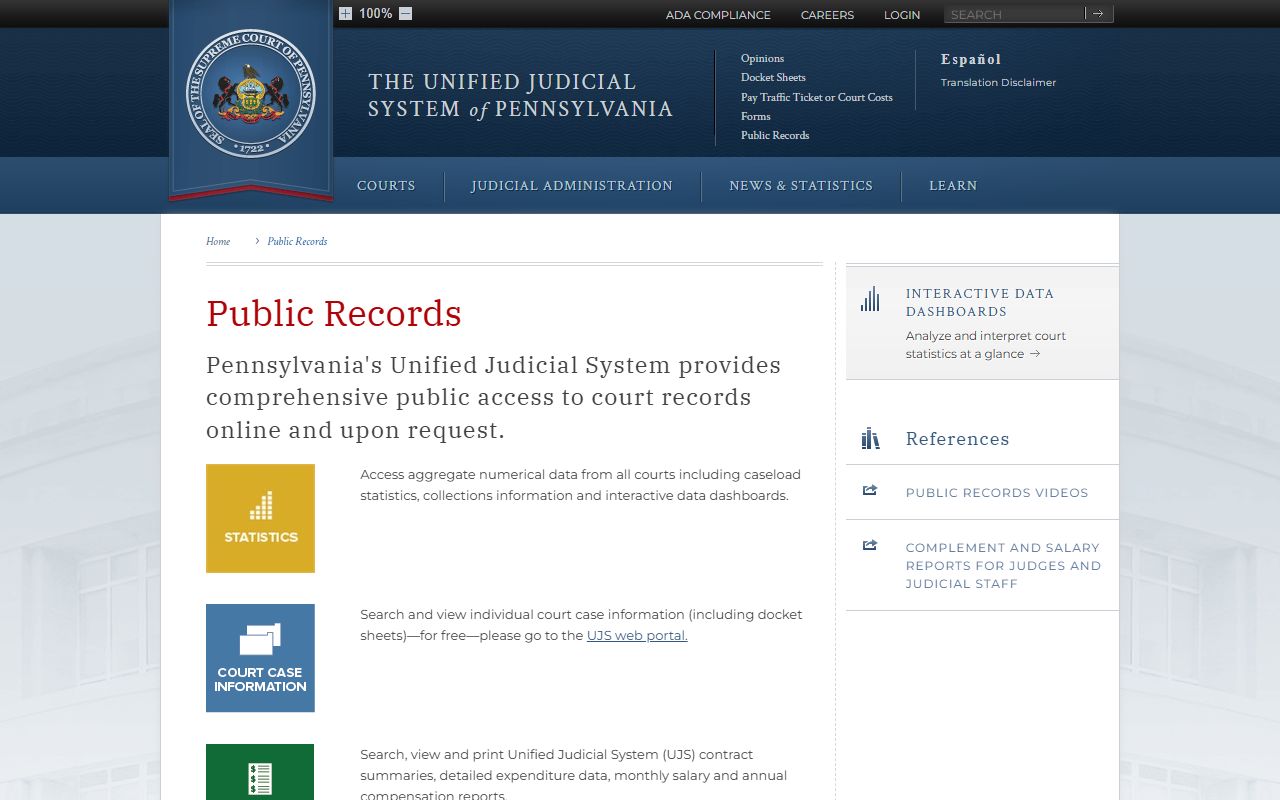
That statewide framework matters because Lehigh County clerks must follow court access rules even when the county maintains the local file.
- Criminal records: charges, docket entries, bail, pleas, dispositions, sentences, costs, and appeal entries.
- Civil records: complaints, answers, motions, orders, judgments, liens, and satisfactions.
- Family and divorce records: public docket entries with restricted treatment for sensitive custody, abuse, financial, and minor-related material.
- Traffic records: citation data, pleas, hearings, dispositions, fines, and failure-to-appear entries at the MDJ level.
- Orphans' Court records: estates, wills, petitions, accounts, guardianships, and related fiduciary matters.
What Lehigh County Dockets Show
A docket is the chronological case activity list. It is not always the full file. A Lehigh County Court docket may show the case caption, filing date, court level, judge or MDJ office, parties, attorneys, case status, events, financial entries, hearing dates, and final disposition. Public docket sheets often list filings and orders without giving the public a free document image.
Criminal dockets can include offense descriptions, statutes, grading, offense date, charge disposition, sentence, bail type, bail amount, and probation entries when public. Civil dockets may show complaints, praecipes, motions, service, judgments, liens, writs, satisfactions, and appeals. Redactions remove Social Security numbers, financial account data, minors' names, victim details, confidential addresses, and sealed filings.
| Field | What It Shows |
|---|---|
| Docket number | The case identifier, often with CP-39 in Lehigh County Common Pleas criminal matters. |
| Case caption | Names and roles, such as Commonwealth v. Defendant or Plaintiff v. Defendant. |
| Status | Whether the case is active, closed, disposed, inactive, sealed, transferred, or appealed. |
| Docket events | Filings, hearings, orders, continuances, pleas, judgments, appeals, or sentencing events. |
| Financial entries | Bail, fines, costs, restitution, judgments, sheriff costs, and satisfaction entries where public. |
Lehigh County Public Access Rules
Public access to Lehigh County Court records is governed by Pennsylvania judiciary policy for court case records and by county open-records law for many county administrative records. These routes are not interchangeable. A Right-to-Know Law request can help with county executive-branch records, but it does not override a sealed court order, juvenile law, adoption confidentiality, or judiciary access policy.
Start with a public docket when the question is about a case. Use the Clerk of Judicial Records division when a copy, certification, older file, or document review is needed. Use the county Open Records Office when the record is a county administrative record rather than a court case filing.
Key access rules:
Pennsylvania Right-to-Know Law, 65 P.S. Chapter 67 governs many county records, but court case records follow judiciary rules.
UJS Case Records Public Access Policy sets statewide court-record access and confidentiality limits.
18 Pa.C.S. Section 9122 covers expungement of eligible criminal history record information.
18 Pa.C.S. Section 9122.1 covers Pennsylvania Clean Slate limited access for certain criminal records.
42 Pa.C.S. Section 6307 limits inspection of juvenile files and records.
Restricted Lehigh County Records
Not every Lehigh County Court record is open to the public. Juvenile delinquency and dependency files are restricted. Adoption records are confidential. Mental health proceedings and sensitive medical material are restricted. Protection-from-abuse, custody, support, and family matters can include public docket entries while hiding addresses, minors' names, financial details, and abuse allegations.
Sealed and expunged records do not appear through normal public search. Limited access under Pennsylvania Clean Slate rules seals eligible records from most public view while leaving access for certain criminal justice uses. If a public docket says sealed, restricted, inactive, or unavailable, the safer next step is to contact the listed court or clerk division rather than assume the record does not exist.
Note: Online absence is not proof of no case, no warrant, or no sealed record in Lehigh County.
Lehigh County Criminal Records
Criminal court records can begin in Magisterial District Court and later move to the Court of Common Pleas. Police filing, preliminary arraignment, bail, and preliminary hearing events may appear at the MDJ level. Felony and more serious misdemeanor cases that are held for court then move into Common Pleas, where the full criminal case record tracks the formal charges, pleas, motions, hearings, disposition, sentence, costs, and appeal entries.
The Lehigh County District Attorney's Office prosecutes county criminal cases, and District Attorney Gavin P. Holihan is identified on the county's official DA materials. The Public Defender's Office, led by Chief Public Defender Kimberly F. Makoul, represents financially eligible defendants. Those offices may appear in docket activity, but ordinary certified criminal copies route through the Clerk of Courts division rather than the DA or defense office.
| Term | Plain Meaning |
|---|---|
| Charge | An accusation filed in the case, not the same thing as a conviction. |
| Disposition | The outcome of a charge or case, such as guilty plea, dismissed, withdrawn, or acquitted. |
| Nolle prosequi | The prosecution does not proceed on that charge. |
| Sentence | The penalty imposed after conviction, such as probation, incarceration, fines, or restitution. |
Lehigh County Sheriff and Jail
The Lehigh County Sheriff's Office is led by Sheriff Joseph N. Hanna. The Sheriff's Office handles courthouse and court security support, service of certain court papers, licenses to carry firearms, sheriff sales, and law-enforcement functions assigned by law. It is separate from the Department of Corrections. Jail custody, visits, mail, and commissary questions route through Corrections and jail channels, not through the civil counter.
For custody, use the Lehigh County Jail and Department of Corrections pages, VINELink for custody notification where available, and the Pennsylvania DOC locator for state prison or parole custody. A court docket may show bail and case activity, but it is not a live jail roster. No official Lehigh County Sheriff mobile app with inmate or warrant lookup was confirmed in the research, so app-only searches should not be assumed.
The Lehigh County government homepage routes users to county departments, corrections, sheriff services, and record offices.
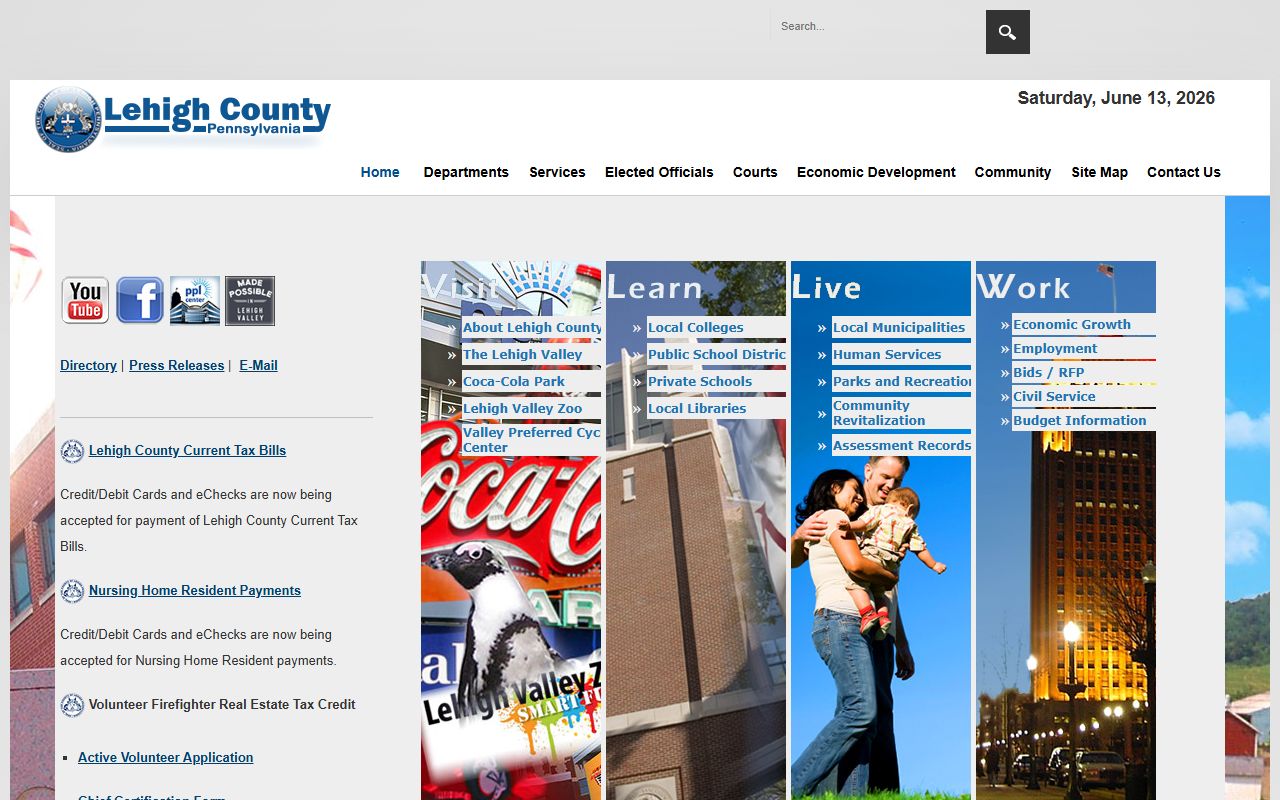
That county routing is useful when a question shifts from a court docket to jail, sheriff, or county office records.
Lehigh County Warrant Records
Lehigh County warrant checks require more than one path because no official public countywide active warrant database was confirmed in the research. Bench warrants may appear on UJS Common Pleas or MDJ docket sheets. Summary or traffic failure-to-appear issues may be tied to the specific Magisterial District Court listed on the case. Sheriff, police, and DA channels may have warrant information that is not public online.
A visible warrant entry may show the docket number, issuing court, judge or MDJ, defendant name, warrant type, trigger, bail status, and whether the warrant was issued, served, lifted, or vacated. Sealed warrants, recent warrants, juvenile warrants, and investigative warrants may not be visible. If a warrant may exist, contact the listed court office or counsel before relying on web search alone.
Lehigh Marriage and Orphans' Court
Marriage records and divorce records use different channels in Lehigh County. Marriage licenses and certified marriage copies are handled through the Register of Wills division. Divorce docket information is searched through Common Pleas court records, and copies route through the Civil Division or Prothonotary side of the Clerk of Judicial Records. Sensitive custody, support, abuse, minor, and financial filings may be restricted or redacted.
Estate and guardianship matters are not filed in a separate Pennsylvania probate court. Lehigh County uses the Register of Wills and Orphans' Court terminology. Estate administration starts with the Register of Wills for wills and letters. Contested estate matters, guardianship petitions, accounts, and fiduciary disputes may require Orphans' Court action.
- Testator
- A person who made a will.
- Executor
- The person named to administer an estate under a will.
- Intestate
- A death without a valid will controlling the estate.
- Guardianship
- A court-supervised role for decisions about a minor or incapacitated person.
Lehigh County Records Fees
Copy and filing costs depend on the division and record type. The research did not confirm a current plain-copy or certified-copy amount for every civil and criminal record, so those amounts should be checked with the correct division before a mailed request. The 2026 Register of Wills fee schedule does identify several probate-related case initiation charges and states that estate probate fees depend on gross probate value.
| Item | Amount or Note |
|---|---|
| Plain civil or criminal copies | Confirm with the Civil Division or Criminal Division before submitting payment. |
| Certified civil or criminal copies | Confirm fee, case number, names, and payment method with the matching clerk division. |
| Judicial Computer Project fee | $41.25 listed on the 2026 Register of Wills fee schedule at case initiation. |
| Automation Fee | $5.00 listed on the 2026 Register of Wills fee schedule at case initiation. |
| E-Filing Fee | $5.00 listed on the 2026 Register of Wills fee schedule at case initiation. |
| Estate probate filings | Amount depends on gross probate value under the Register of Wills schedule. |
Federal Records Near Lehigh
Federal cases from Lehigh County are not held by the Clerk of Judicial Records. Federal civil, criminal, bankruptcy, and appellate records use federal systems. The U.S. District Court for the Eastern District of Pennsylvania, PACER, CM/ECF, the U.S. Bankruptcy Court for the Eastern District of Pennsylvania, and the U.S. Court of Appeals for the Third Circuit are the relevant channels for federal docket access.
County warrants, county jail bookings, and Lehigh County Common Pleas dockets do not appear in PACER unless there is a separate federal case. CourtListener can help with some opinions and docket references, but it is not the official court record.
Lehigh County Court History
Lehigh County was created in 1812 from part of Northampton County, with Allentown as the county seat. Its court history follows Pennsylvania's Court of Common Pleas tradition, where local trial courts handled civil disputes, criminal prosecutions, estate matters, family matters, and county litigation long before modern docket systems.
Modern access is split between UJS online docket sheets and county division records held by the Clerk of Judicial Records. That split is the main practical lesson from the county's move from paper files to online lookups. The docket may identify the case, but the office that holds the copy may still be the Prothonotary, Clerk of Courts, Register of Wills, or an MDJ court.
The Lehigh County Court of Common Pleas homepage is the primary court operations source for the 31st Judicial District.
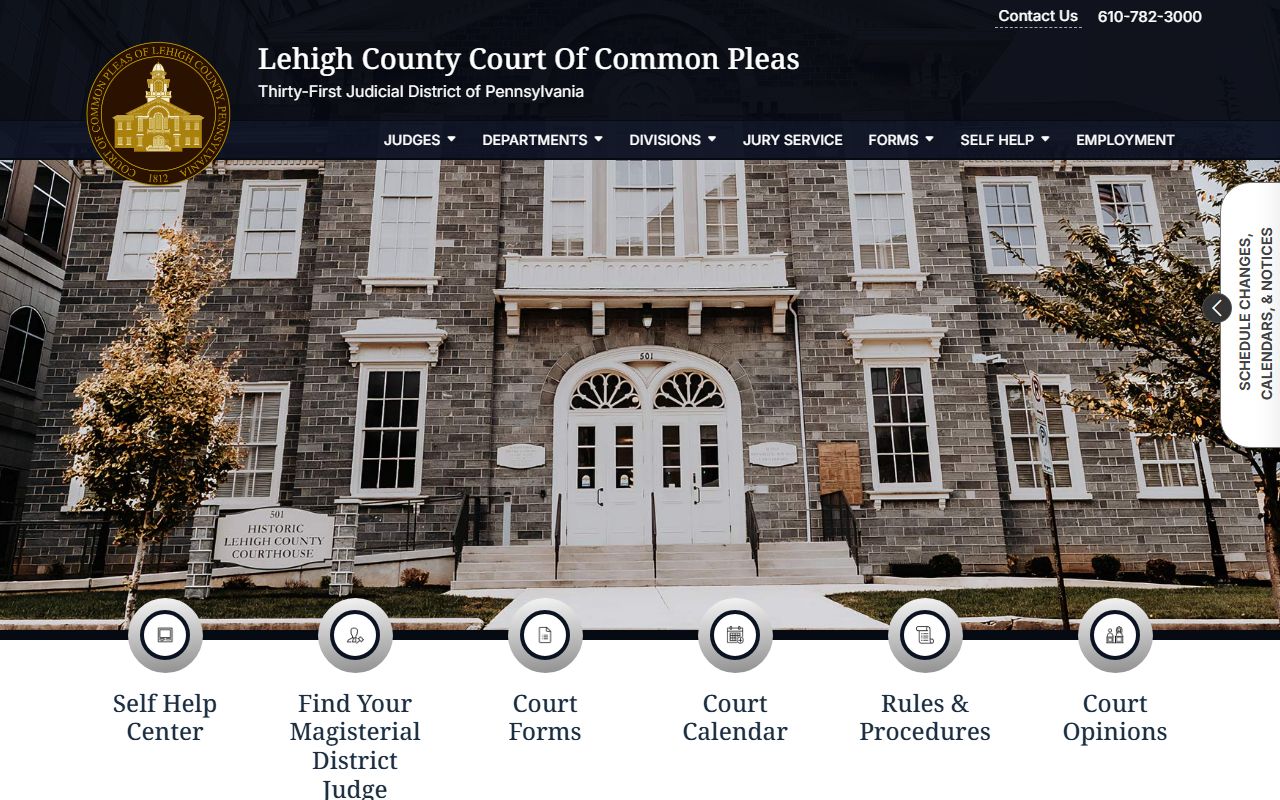
Use that court source for judges, court administration, local court information, and court-level routing.
Lehigh County Search Tips
Local geography affects searches. People in Allentown, Bethlehem-area addresses within the county, Emmaus, Whitehall, Catasauqua, Macungie, Coopersburg, Slatington, and nearby townships may have MDJ matters outside the downtown courthouse. The issuing court on a citation or notice is often more useful than the person's home address.
Bring or save the docket number whenever possible. For Common Pleas criminal matters, county code 39 can help identify Lehigh County dockets. For traffic citations and landlord-tenant claims, check the MDJ docket before assuming the Common Pleas courthouse has the first file. For estate or marriage records, start with the Register of Wills and Orphans' Court side. For custody, separate county jail, Pennsylvania DOC, and federal BOP searches.
Lehigh County Court FAQ
Where should a Lehigh County Court records search start?
Start with UJS Case Search or a specific UJS docket sheet report when the question is about a court case. Use Lehigh County ORA and the correct Clerk of Judicial Records division when the question is about a county-held index, copy, certified record, estate file, marriage record, or older document.
Are Lehigh County Court documents downloadable online?
Public docket sheets often list case activity, but they do not always provide document images. Certified copies and many file documents require a request to the Civil Division, Criminal Division, Register of Wills, Orphans' Court, or the specific MDJ court.
Does a missing online result mean no record exists?
No. A case may be sealed, restricted, too recent, older than the online index, filed under a different name, or held at a different court level. Search both Common Pleas and MDJ records when the case path is unclear.
Who keeps Lehigh County criminal court records?
Criminal court copies and criminal filing records route through the Criminal Division or Clerk of Courts side of the Clerk of Judicial Records. Early criminal events may also appear on an MDJ docket before the case reaches Common Pleas.
Are traffic records the same as driver records?
No. A traffic court docket shows the citation and court outcome. A PennDOT driver history shows license status, reportable convictions, points, suspensions, restorations, and driver-history data.
Where are estate records kept?
Estate, will, guardianship, and related Orphans' Court records route through the Register of Wills and Orphans' Court side of the Clerk of Judicial Records.