
Lehigh County Criminal Court Records
A Lehigh County criminal court record is the court case file, not merely an arrest log. It starts with a criminal complaint or other charging document and then grows as the case moves through preliminary events, arraignment, motions, plea negotiations, trial settings, verdict or plea, disposition, sentencing, costs, probation terms, and appeal entries. The Criminal Division or Clerk of Courts side of the Clerk of Judicial Records is the local office for criminal docket filings and certified criminal case copies.
Criminal cases may appear at two court levels. Magisterial District Courts handle preliminary arraignments, bail decisions in many new cases, preliminary hearings, and summary matters. The Lehigh County Court of Common Pleas handles felony cases, many misdemeanor cases once held for court, sentencing, post-sentence motions, and appeals from MDJ decisions. For a focused explanation of the charges themselves, use the Lehigh County arrest records and court charges page. For all civil, family, probate, traffic, and criminal channels together, use the broader court records page.
Search Lehigh County Criminal Records
The public search path usually begins with Pennsylvania UJS Case Search. Use the Common Pleas docket report when the case is at the Court of Common Pleas level, and use the MDJ docket report for preliminary hearings, preliminary arraignments, summary criminal cases, and traffic-related criminal events. A Lehigh County Common Pleas criminal docket often uses a CP-39-CR-number-year pattern, with 39 identifying Lehigh County.
- Open UJS Case Search or the Common Pleas or MDJ docket sheet report.
- Select the right court level and choose Lehigh County when a county filter is available.
- Search by docket number if known, or search by defendant name with a date range.
- Open the docket sheet and review charge rows, event entries, bail, case status, disposition, and sentence fields.
- Use the Criminal Division or Clerk of Courts for certified copies, older records, restricted questions, or documents not shown online.
Some criminal-record questions are not answered by the court docket alone. Sex-offender registration is searched through the Pennsylvania Megan's Law Registry when registration status is the issue. State prison or parole custody is separate from the court case file. Juvenile and sealed criminal matters may not appear in ordinary public search.
Lehigh County Criminal Case Flow
A criminal case often begins in a lower-court setting before it becomes a Common Pleas case. Police file or support the complaint, a magisterial district judge may handle preliminary arraignment and bail, and a preliminary hearing can decide whether charges move forward. If charges are held for court, the Court of Common Pleas docket becomes the main record for later criminal case activity. The District Attorney appears for the Commonwealth, and defense counsel or the Public Defender may appear for the accused person.
Case flow: Charges Filed › Arraignment › Pretrial › Plea or Trial › Disposition › Sentencing
| Stage | What Happens |
|---|---|
| Charges filed | The complaint or information lists the alleged offenses, statutes, grading, and offense date. |
| Arraignment | The court addresses the charges, counsel status, plea posture, and next dates. |
| Pretrial | Motions, discovery, continuances, bail issues, and negotiations appear as docket events. |
| Plea or trial | The docket records plea entries, trial events, verdicts, acquittals, dismissals, or withdrawals. |
| Disposition | Each charge receives an outcome such as guilty, not guilty, dismissed, withdrawn, or nolle prosequi. |
| Sentencing | The sentence can show probation, incarceration, fines, costs, restitution, or other court-ordered terms. |
Lehigh County Criminal Record Fields
Criminal court records should be read charge by charge. One case can contain several offenses, and each offense can end in a different way. A top-line case status does not always reveal the current status of every count. Look at the offense description, statute, grading, disposition, sentence, and docket events together before drawing a conclusion about what happened in a Lehigh County criminal case.
| Field | What It Shows |
|---|---|
| Case number | The docket identifier, often with CP-39-CR format for Common Pleas criminal cases. |
| Defendant and caption | The party charged and the Commonwealth caption used by Pennsylvania courts. |
| Charges | Offense name, statute, grading, offense date, and charge count when public. |
| Bail | Bail type, amount, conditions, forfeiture, or bail change entries if public. |
| Hearings | Preliminary hearing, arraignment, pretrial conference, trial, plea, sentencing, or violation dates. |
| Motions and orders | Written requests, rulings, continuances, suppression issues, and other court actions. |
| Disposition | The outcome of each charge, including guilty, not guilty, dismissed, withdrawn, or nolle prosequi. |
| Sentence | Probation, incarceration, parole-related terms, fines, costs, restitution, or treatment conditions. |
| Appeal entries | Post-sentence motions, notices of appeal, and appellate remand or transfer events. |
Charges vs Convictions
A charge is an accusation filed in court. A conviction is a final finding or plea of guilt. Lehigh County criminal court records may show charges that were later amended, reduced, dismissed, withdrawn, or resolved by nolle prosequi. That is why a criminal court record should be read through the disposition and sentence fields, not only through the charge list at the top of the docket.
| Point | Charge | Conviction |
|---|---|---|
| Meaning | An allegation that a crime was committed. | A guilty plea, guilty verdict, or equivalent finding. |
| Timing | Appears early in the court case. | Appears after plea, trial, or other final case action. |
| Record risk | Can remain visible even if later dismissed unless sealed or expunged. | Can affect sentence, costs, supervision, and collateral consequences. |
| How to verify | Read the charge row and amended entries. | Read disposition, sentence, and final order entries. |
The Pennsylvania expungement statute is one source used for criminal-record limits.
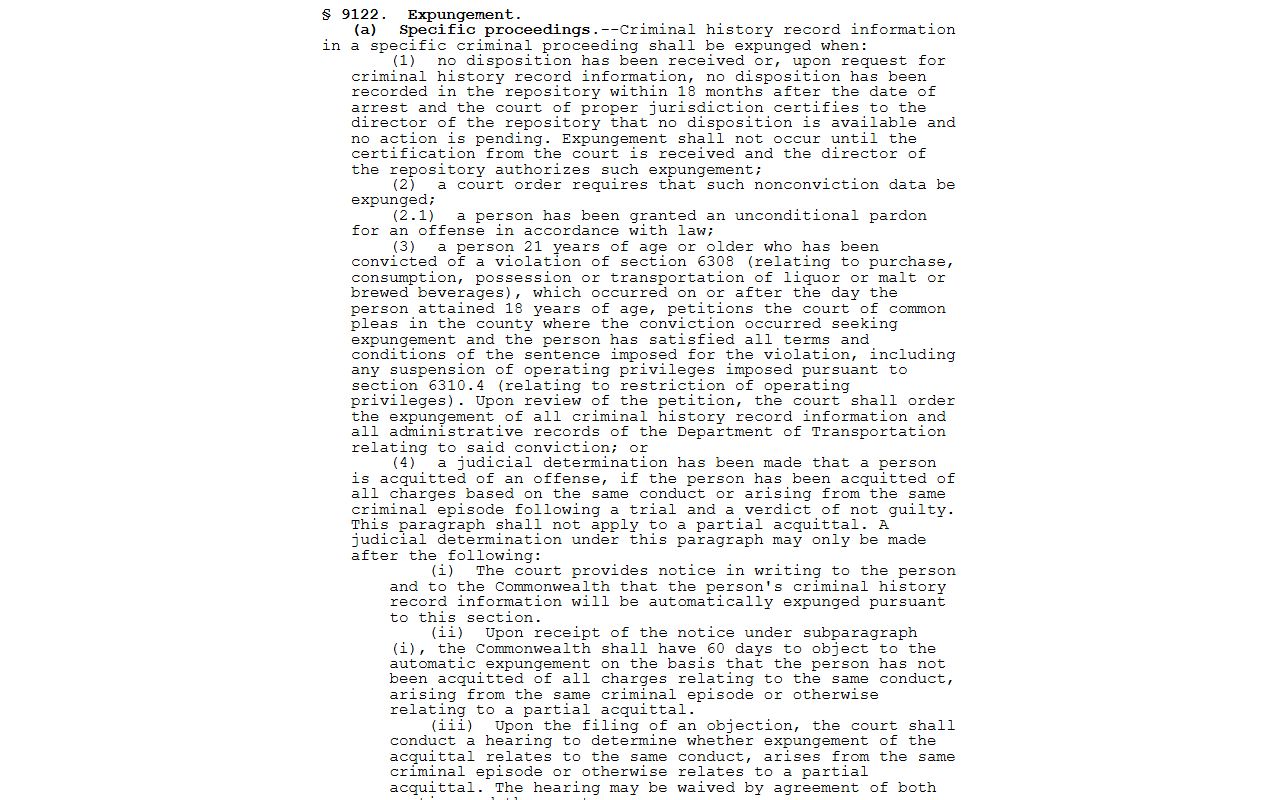
That statute matters when a Lehigh County criminal court record ended in a result that may qualify for later record relief.
Read Dispositions and Sentences
Disposition language carries the most important meaning in a criminal court record. Guilty and not guilty are plain outcomes. Dismissed means the count or case did not proceed to a conviction in that form. Withdrawn can mean the prosecution or charging party removed a charge. Nolle prosequi means the prosecution does not proceed on that charge. A sentence follows a conviction or qualifying plea and may include probation, jail, prison, fines, costs, restitution, treatment, or supervision terms.
The docket can also show ARD, diversion, treatment-court activity, probation violations, bench warrants, bail changes, and appeal entries. These entries require context. A bench warrant may reflect a missed court date or noncompliance. A probation violation entry does not prove a new conviction by itself. A sentence entry may have multiple parts, and costs or restitution can remain after the custody or probation term ends.
Note: Always read each charge row because one Lehigh County case can have mixed outcomes.
DA and Defense Roles
The Lehigh County District Attorney's Office prosecutes criminal cases for the Commonwealth. The current District Attorney is Gavin P. Holihan, whose official biography states that his term began in January 2024 after election in November 2023. The DA reviews and prosecutes felony and misdemeanor cases, works with police agencies, handles victim and witness services, screens diversion or treatment-court issues where applicable, and appears in Lehigh County criminal court proceedings.
The Lehigh County Public Defender provides court-appointed defense services for financially eligible defendants. The official online application identifies Kimberly F. Makoul as Chief Public Defender. Public Defender involvement can appear in docket entries, attorney listings, hearing events, and continuances. Eligibility is not automatic; applicants generally complete a financial screening and provide case information.
Sealed vs Expunged Records
Restricted criminal court records are not missing records. They are records that ordinary public search cannot show. Pennsylvania uses both expungement and limited access. Expungement can remove eligible criminal history information when statutory rules are met. Limited access, including Clean Slate limited access, can hide eligible records from most public view while preserving access for criminal justice agencies or other authorized users.
| Point | Limited Access or Sealed | Expunged |
|---|---|---|
| Public view | Hidden from most public searches. | Removed or destroyed from qualifying repositories as ordered or allowed by law. |
| Agency access | Some criminal justice access can remain. | Access is narrower and depends on the expungement order and law. |
| Common basis | Clean Slate or court-ordered limited access for eligible records. | Eligible dismissal, acquittal, ARD completion, summary waiting period, pardon, or other statutory route. |
| Practical step | Confirm the docket and eligibility before filing. | File in the court that handled the case when manual relief is needed. |
Pennsylvania's Clean Slate limited access statute is a key record-access source.
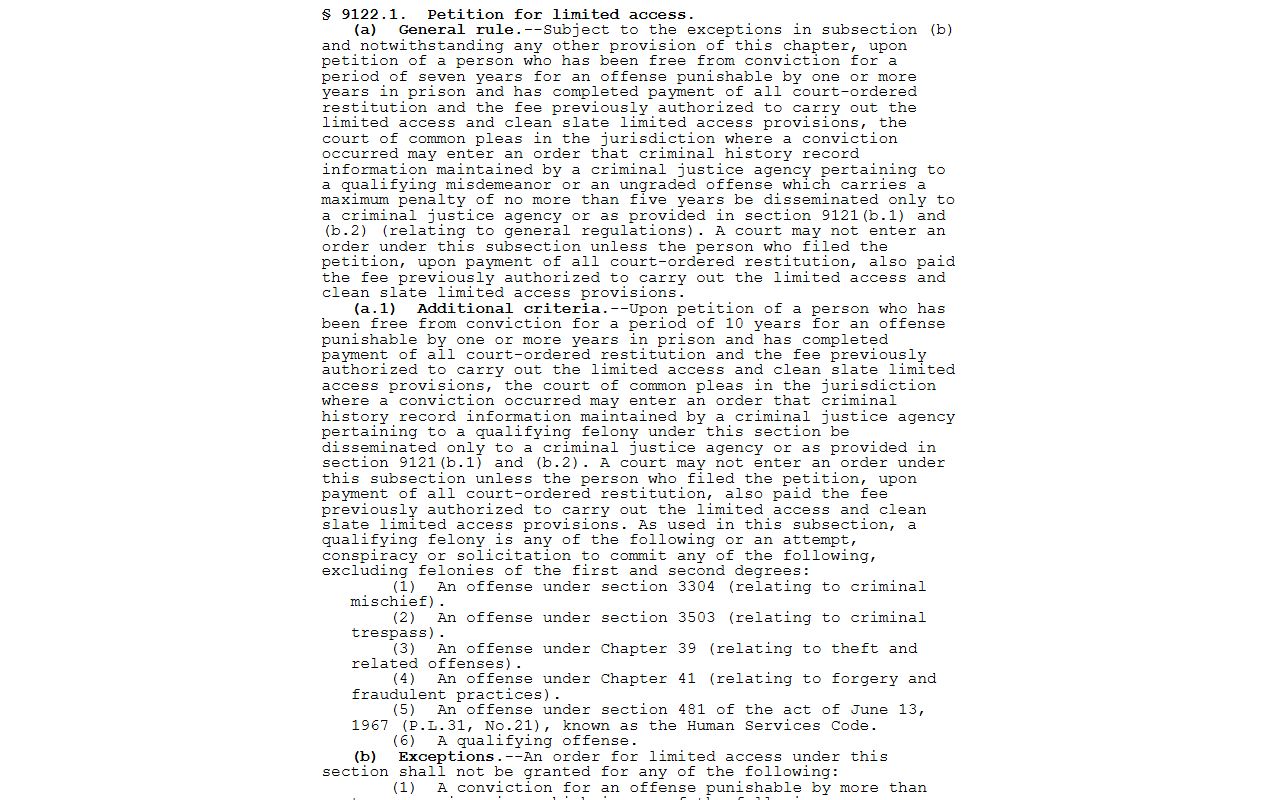
Clean Slate can affect what a public Lehigh County criminal court records search returns, even when agencies retain lawful access.
Criminal Record Public Access
Public access to Lehigh County criminal court records is controlled by the Pennsylvania judiciary's case-record access policy. The UJS docket portal makes many criminal docket sheets public, but it does not guarantee document images, personal identifiers, juvenile information, victim details, confidential addresses, or sealed filings. The UJS Case Records Public Access Policy should be treated as the core rule source for public criminal case records.
The juvenile records statute restricts public inspection of juvenile files and records.
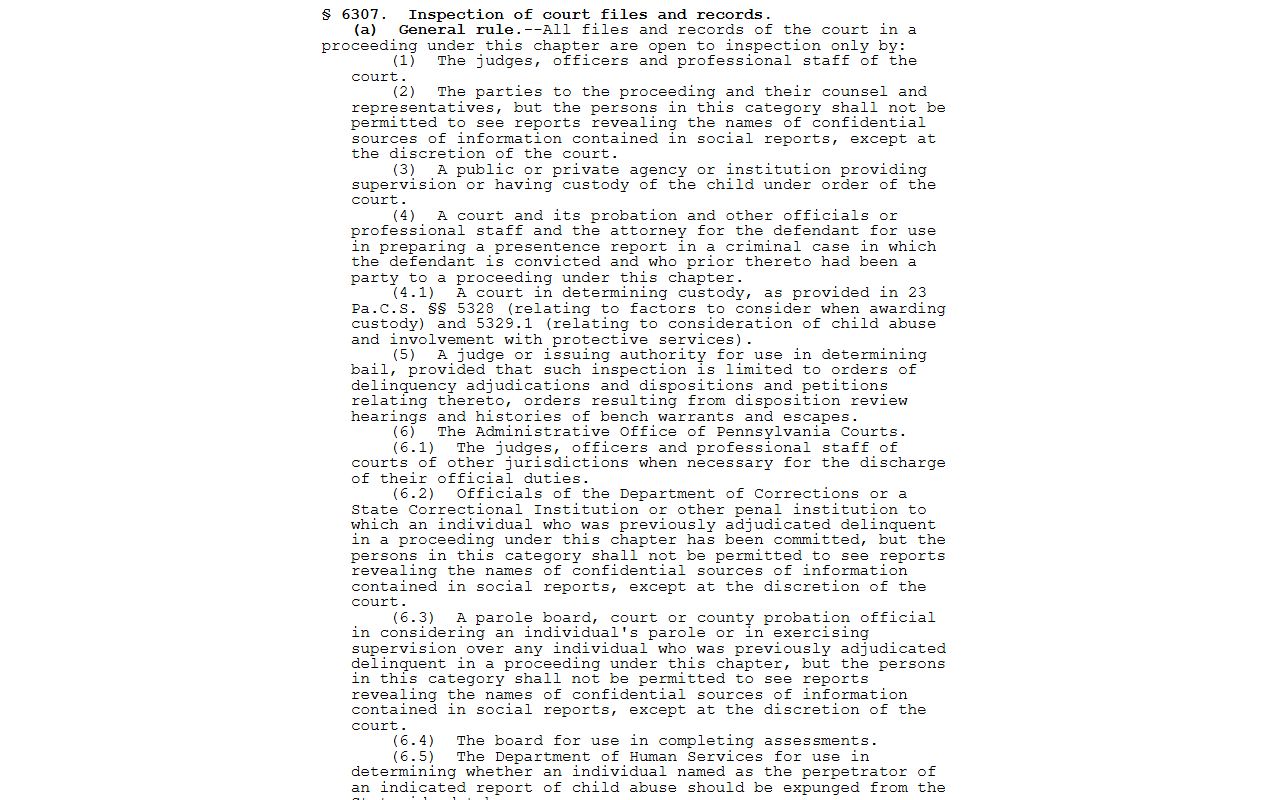
That source is why juvenile entries should not be treated like ordinary adult criminal docket records.
Key Statutes:
18 Pa.C.S. Section 9122 governs expungement of eligible criminal history record information.
18 Pa.C.S. Section 9122.1 governs Clean Slate limited access for certain criminal records.
42 Pa.C.S. Section 6307 restricts juvenile files and records.
Restricted Lehigh County Criminal Records
Restricted Lehigh County criminal court records include juvenile matters, sealed cases, expunged records, victim details, confidential addresses, mental-health material, and records withheld by court order. Ongoing investigations and sealed warrants may not be public even if later court events become visible. A docket that says sealed, restricted, or unavailable should be handled through the Criminal Division, the court, or counsel, not through a broad public-records request.
The Pennsylvania Megan's Law Registry is an official statewide source for sex-offender registration information.
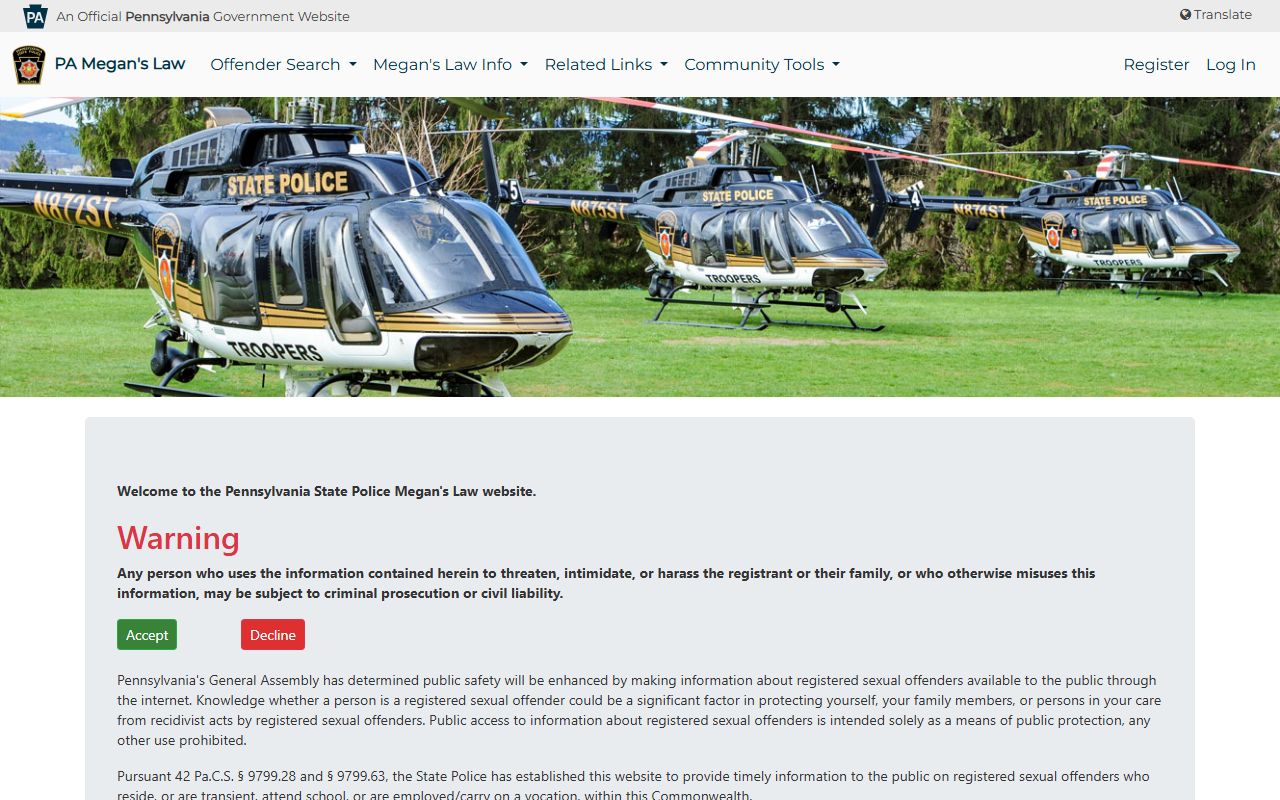
That registry is separate from the Lehigh County criminal court case file and should not be used as a substitute for reading the court docket.