
Lehigh County Marriage Licenses
Marriage licenses and marriage records in Lehigh County are handled through the Register of Wills division of the Clerk of Judicial Records. That office also sits in the same broader records structure as the Orphans' Court side of the county records system. The current Clerk of Judicial Records is Michelle Graupner. For marriage questions, use the Register of Wills, not the Criminal Division or the Clerk of Courts.
Applicants should confirm current requirements and fees before applying. The research supports the main application categories: identity proof, personal information, prior-marriage termination details when applicable, and statutory eligibility questions. Pennsylvania also has a waiting period between license issuance and ceremony, but the exact current timing should be verified through the county or state page before relying on a date. After the ceremony, the officiant returns the completed license for county recording.
The Register of Wills source is the county office reference for Lehigh County marriage records and certified copies.
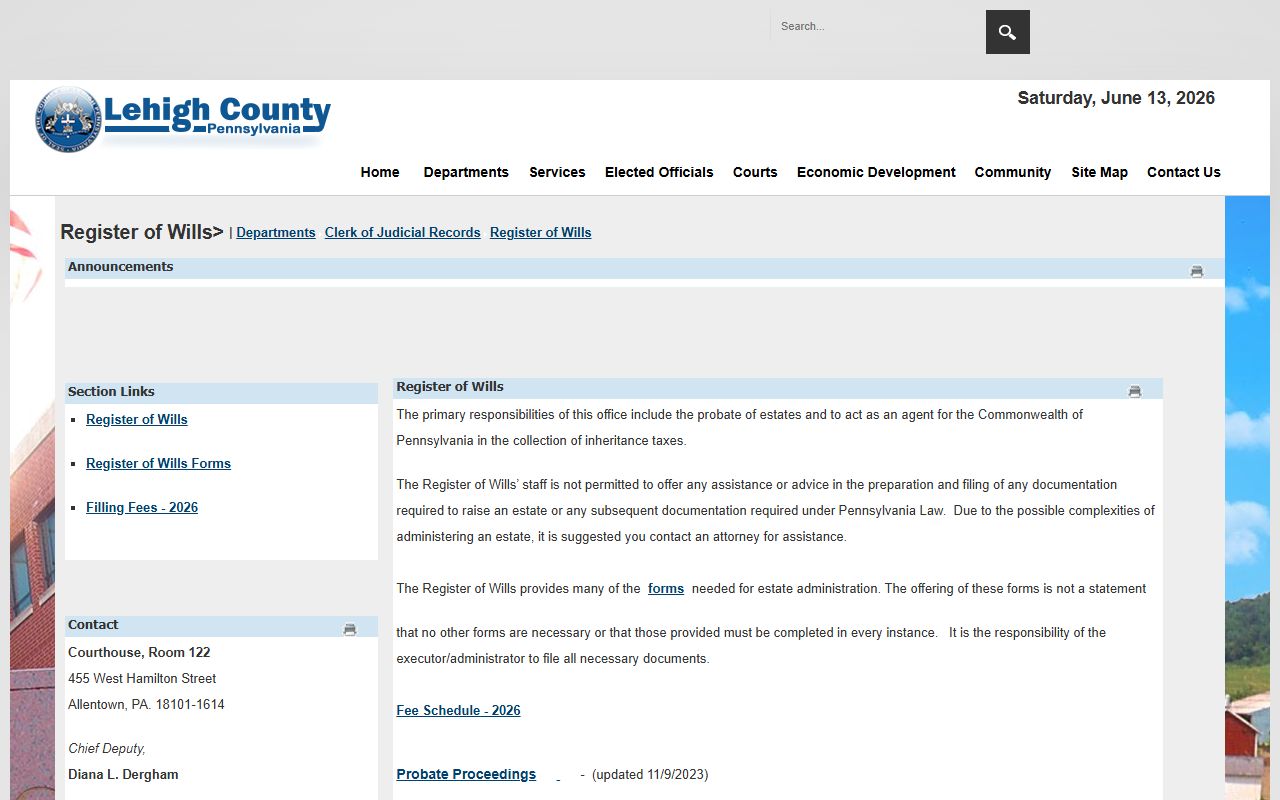
That source matters because Pennsylvania marriage records are county-centered even though state vital-record guidance can help explain the process.
Apply for a Marriage License
Both applicants should prepare before contacting the Register of Wills. A complete application usually requires full legal names, dates of birth or ages, residence or mailing addresses, Social Security numbers where applicable, prior-marriage information, parent information, and signatures under oath. If either applicant had a prior marriage, the office may need the date and manner it ended, such as divorce or death.
- Confirm the current Lehigh County Register of Wills application process, appointment rules, and fee.
- Gather identity proof, personal information, and any prior-marriage termination details.
- Complete the application with both applicants' legal information and required certifications.
- Pay the county marriage-license fee by the method accepted by the Register of Wills.
- Observe Pennsylvania's waiting-period rule before the ceremony, after confirming the current timing.
- After the ceremony, make sure the officiant returns the completed license for recording.
- Request certified marriage copies from the Register of Wills when proof is needed.
Marriage Application Field Table
The application field inventory below reflects the research file's county process summary. It should be used as a preparation checklist, not as a substitute for the current county form. Confidential fields, such as Social Security numbers, are handled under official office rules and should not be sent through informal channels.
| Field Label | Type | Required | Notes |
|---|---|---|---|
| Applicant 1 legal name | Text | Yes | Full legal name. |
| Applicant 2 legal name | Text | Yes | Full legal name. |
| Date of birth / age | Date or text | Yes | Used for eligibility verification. |
| Address | Text | Yes | Residence or mailing information. |
| Social Security number | Text | Likely required where applicable | Confidential handling applies. |
| Prior marriage | Checkbox or text | Conditional | Date and manner ended if divorced or widowed. |
| Parent information | Text | Often required | Varies by form. |
| Oath/signature | Signature | Yes | Applicants certify the information. |
Marriage Fee Notes
The research confirms that Lehigh County's Register of Wills publishes current marriage and estate fee information, but it did not provide a safe exact marriage-license dollar amount for publication. Use the county office fee page or contact the Register of Wills before applying. For divorce fees, use the Civil Division/Prothonotary because divorce is a civil court case, not a marriage-license record.
| Item | Amount / Note |
|---|---|
| Marriage license | Verify current amount with the Lehigh County Register of Wills. |
| Certified marriage record copy | Verify copy and certification fee with the Register of Wills. |
| Divorce filing | Verify current civil filing fee with the Civil Division / Prothonotary. |
| Certified divorce decree copy | Verify current certified-copy fee with the Civil Division / Prothonotary. |
Note: Do not use an old fee from a third-party site when the county office says to confirm the current schedule.
Search Lehigh County Marriage Records
For a certified marriage record, start with the Register of Wills. Useful search facts include both spouses' names, approximate application or ceremony date, and any license number if known. The Lehigh County Online Records Access portal may help with county record indexes, but certified copies and eligibility questions should route through the official division that holds the marriage record.
The Pennsylvania Department of Health marriage and divorce source gives state-level vital-record guidance.
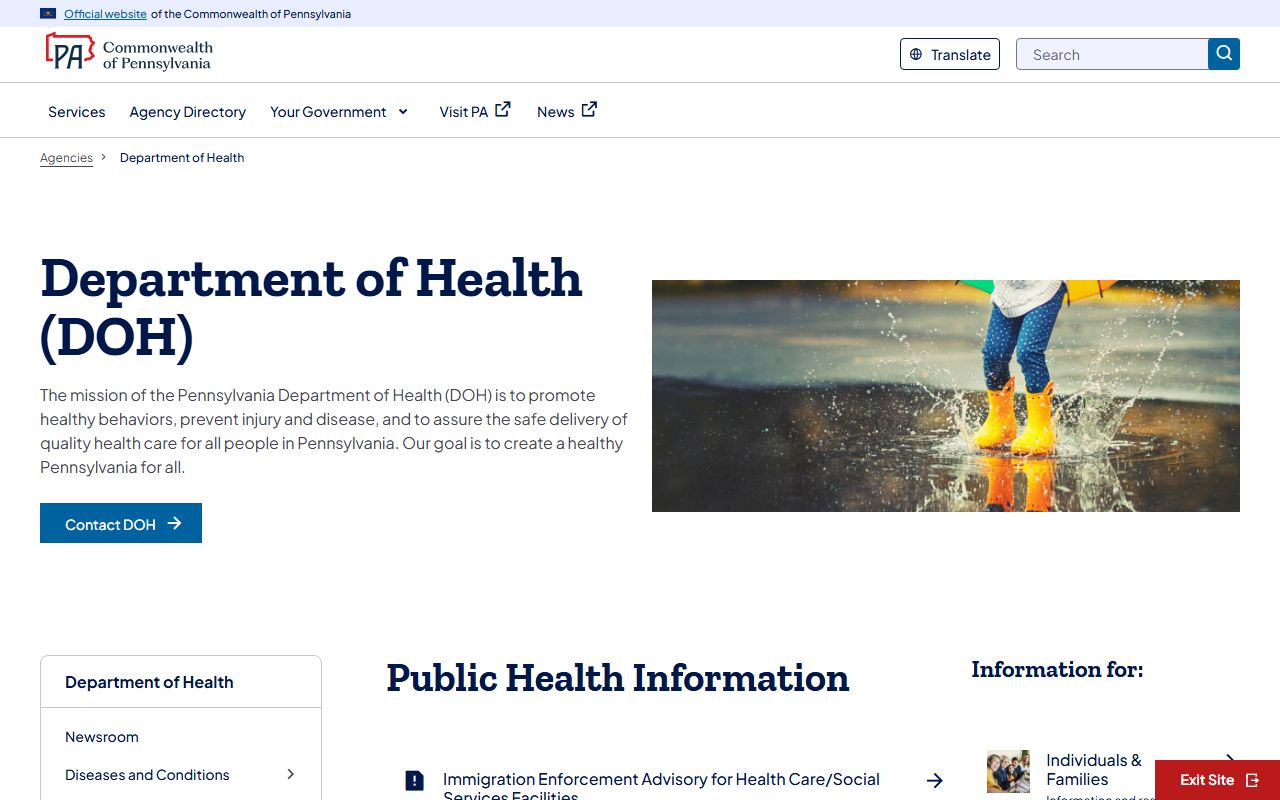
Use state guidance to understand Pennsylvania marriage and divorce records, then use the Lehigh County office for county-issued marriage-license records.
Find Lehigh County Divorce Records
Divorce records are court records. In Lehigh County, divorce filings route through the Civil Division / Prothonotary and the Court of Common Pleas family or civil docket system. A public docket search may show the case caption, docket number, filing date, parties, entries, and disposition. It may not show every document image. Sensitive custody, support, abuse, minor, address, and financial material may be restricted or redacted.
Search UJS Common Pleas docket sheets by party name or docket number for public divorce docket information. For copies of decrees or filings, contact the Civil Division / Prothonotary. Divorce filing itself requires Pennsylvania procedures, correct venue, complaint forms, service, waiting or consent periods where applicable, and court orders for property, custody, support, or related issues.
The Civil Division source is the Lehigh County records route for divorce case files and civil copy requests.
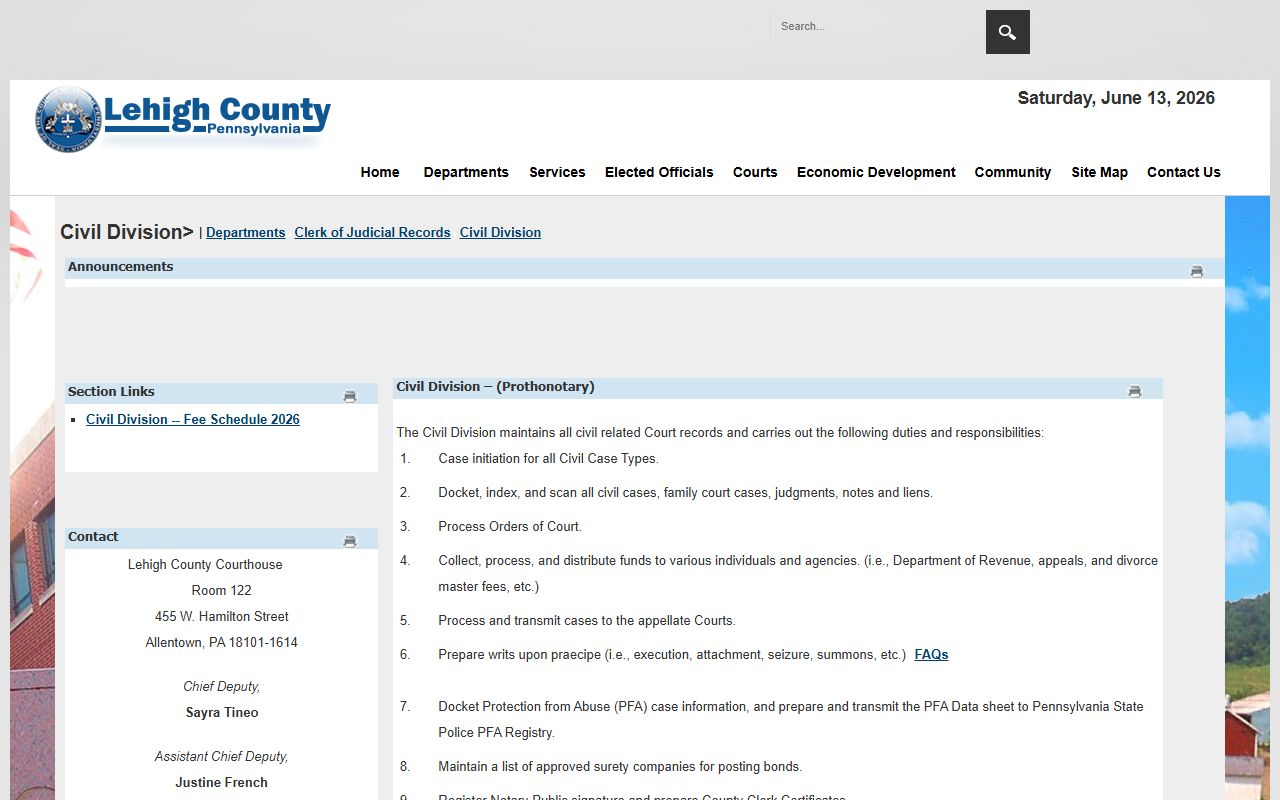
That office is separate from the Register of Wills, which is why marriage and divorce requests should not be sent to the same counter by default.
Certified Copies and Limits
Certified marriage copies come from the Register of Wills or marriage-license office. Certified divorce decrees and divorce case copies come from the Civil Division / Prothonotary. If the public docket identifies a divorce case but does not provide the document image, use the docket number, party names, and filing date when asking the Prothonotary about copy options.
Family court records can include restricted material. A public docket entry does not mean every document is open. Pennsylvania court access rules can restrict minors' names, confidential addresses, victim information, sensitive financial material, and filings sealed by court order. When a restricted divorce or family filing is needed, the office may require proof of party status, attorney status, or a court order before releasing it.
Register of Wills
Clerk of Judicial Records
Lehigh County Courthouse
455 West Hamilton Street
Allentown, PA 18101
Civil Division / Prothonotary
Clerk of Judicial Records
Lehigh County Courthouse
455 West Hamilton Street
Allentown, PA 18101
Name and Date Search Tips
Marriage and divorce searches work best when the request separates the record type first. For a marriage record, use both applicants' names as they appeared at the time of the license, the approximate license or ceremony date, and any known license number. For a divorce record, use the party names, Common Pleas docket number if known, filing year, and any decree date. A current married name may not match the older filing name.
Older spelling differences, hyphenated names, middle initials, and prior names can affect search results. If a name search fails, ask the office whether a date range or license number search is available. If a divorce docket appears in UJS but the decree is not visible, that is not unusual. The Civil Division / Prothonotary remains the route for copy questions, while the Register of Wills remains the route for marriage-license copies.
Important: Marriage-license records and divorce decrees prove different events, so request the document that matches the use.